
What is perfume? Perfume is a carefully formulated fragrance product made by combining aromatic ingredients with a suitable carrier or base.
Perfume is more than just a pleasant fragrance. It can become part of your personal style, create memories and influence the way you feel throughout the day.
From a fresh citrus scent in the morning to a warm oud fragrance in the evening, every perfume tells a different story.
But what exactly is perfume? What is it made from? Why do some fragrances smell fresh while others are warm, woody or sweet? And what makes one perfume feel different from another?
In this guide, The Moments Perfumes takes you through the basics of fragrance so you can understand perfumes better and choose scents that suit your personal style.
What Is Perfume?Perfume is a carefully formulated fragrance product made by combining aromatic ingredients with a suitable carrier or base.
The aromatic materials can include ingredients derived from natural sources as well as aroma materials produced through modern chemistry. These ingredients are blended in specific proportions to create a particular fragrance character.
Depending on the formulation, perfumes may contain fragrance materials, alcohol, water and other ingredients that help create the desired texture, performance and stability.
The final fragrance is designed to develop gradually after application, creating different impressions over time.
How Does Perfume Work?
Understanding what is perfume also helps explain why a fragrance changes as you wear it throughout the day.
When you spray perfume on your skin, you don’t necessarily smell the complete fragrance all at once.
Instead, the fragrance develops in stages.
You may first notice the brighter, more noticeable opening. After some time, the fragrance begins to reveal its heart. Later, deeper materials become more noticeable during the dry-down.
This development is one of the reasons perfume can feel different after 10 minutes, one hour or several hours.
The basic fragrance journey is:
Opening → Heart → Dry Down
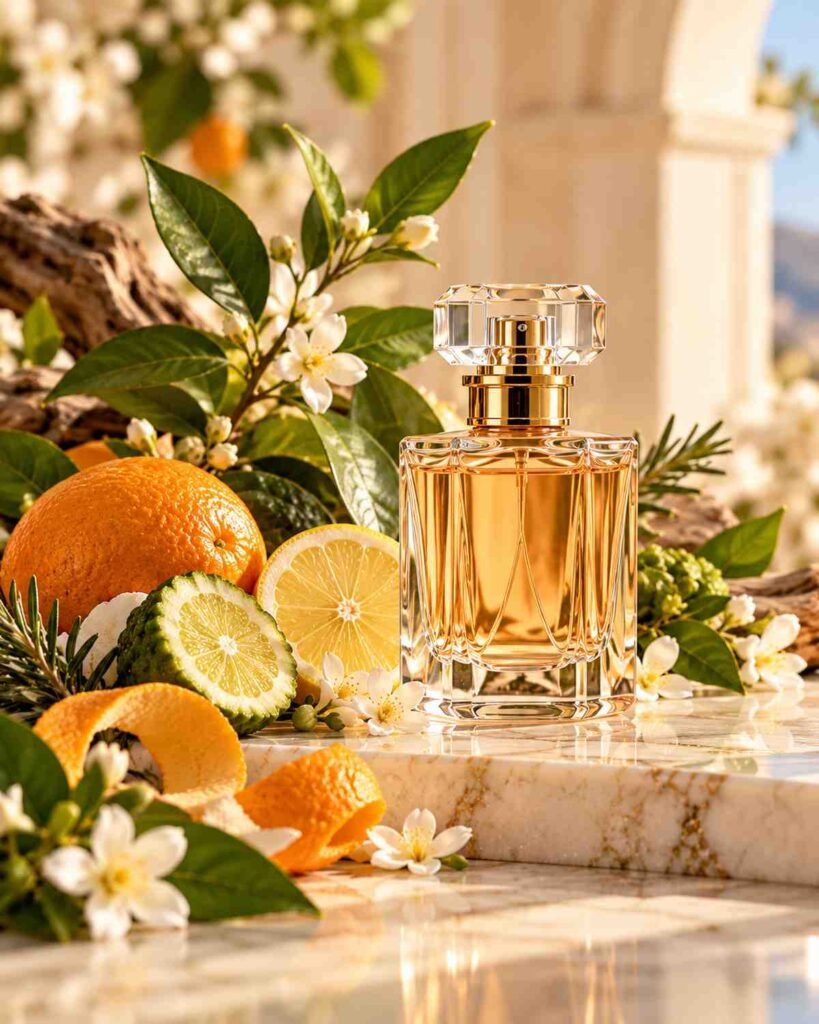
The Three Main Stages of a Perfume
A fragrance is often described through three main stages: top notes, heart notes and base notes. Together, these stages help explain how a perfume changes from its first spray to its later dry-down.
01 — Top NotesTop notes are the scents you typically notice first after applying a fragrance.
They are often bright, fresh and relatively volatile.
Common examples include bergamot, lemon, orange, grapefruit, lavender and mint.
Top notes create the first impression of a perfume. However, they are not necessarily the main character of the fragrance because they generally fade sooner than many heart and base materials.
02 — Heart NotesAfter the initial opening begins to soften, the heart of the fragrance becomes more noticeable.
Heart notes help define the central character of a perfume.
Common heart notes include rose, jasmine, geranium, lavender, ylang-ylang and various fruity or floral accords.
A fragrance with a floral heart may feel romantic and elegant, while an aromatic or spicy heart can create a warmer or more sophisticated impression.
03 — Base NotesBase notes are the deeper elements that become prominent during the later stages of the fragrance.
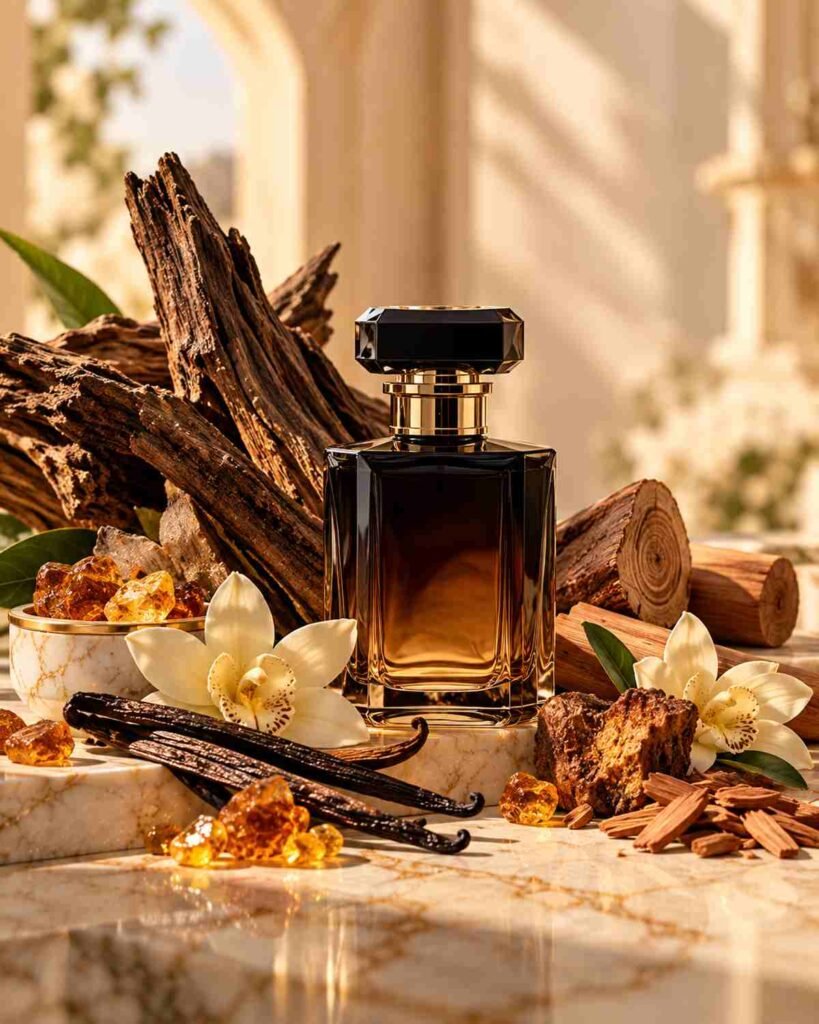
They often include richer materials such as oud, sandalwood, amber, vanilla, musk, patchouli and cedarwood.
Base notes contribute depth and character to a fragrance and can remain noticeable during the later stages of wear.
What Are Fragrance Notes?
When you read a perfume description, you may see words such as bergamot, rose, vanilla, oud or sandalwood.
These are commonly referred to as fragrance notes.
A note describes an individual scent impression or material used to communicate the character of a fragrance.
For example, a fresh fragrance may feature citrus and green notes, while a warm fragrance may combine amber, vanilla and woods.
What Is a Fragrance Family?
Fragrance families help us understand the general character of a perfume. They make it easier to identify the types of scents you naturally enjoy.
Floral
Soft, romantic and flower-focused fragrances may feature rose, jasmine, peony or orange blossom.
Citrus
Fresh, bright and energetic fragrances may feature lemon, bergamot, orange or grapefruit.
Woody
Warm, dry and sophisticated fragrances may feature sandalwood, cedarwood, vetiver or patchouli.
Fresh
Clean, airy and refreshing fragrances are often associated with citrus, green, aquatic or aromatic accords.
Amber
Warm, rich and enveloping fragrances may feature amber-style accords, vanilla, spices and woods.
Gourmand
Sweet fragrances inspired by edible ingredients may feature notes such as vanilla, caramel, chocolate or tonka-style accords.
Oud
Oud fragrances can be deep, woody and distinctive, with the overall character depending on how oud is combined with other fragrance materials.
What Makes a Good Perfume?
When learning what is perfume, it is also important to understand the role of fragrance composition and ingredient quality.
A good perfume isn’t defined by just one factor. Price alone does not determine fragrance quality.
The overall experience can depend on the fragrance composition, the materials used, the formulation, stability, packaging, manufacturing practices and how the fragrance performs for the individual wearer.
Fragrance products should be formulated and used according to recognized fragrance safety standards such as those provided by the International Fragrance Association (IFRA).
The Fragrance Composition
A well-designed fragrance brings its different materials together into a balanced overall composition.
Ingredient Quality
The quality and suitability of fragrance materials matter, but natural does not automatically mean better or safer. Modern perfumery uses both natural and synthetic aroma materials.
Formulation
The way ingredients are combined affects how a fragrance develops and performs.
Stability
Proper formulation and suitable storage can help a fragrance remain consistent over time.
Safety
Fragrance products should be formulated and used according to appropriate safety standards and applicable regulations. The International Fragrance Association publishes standards concerning the safe use of fragrance ingredients.
THE MOMENTS TIP
Don’t choose a fragrance only from its first spray. Give it time to reveal its character.
Why Does the Same Perfume Smell Different on Different People?
Have you ever smelled a perfume on someone else and loved it, but when you tried it yourself, it seemed slightly different?
The way a fragrance is experienced can be influenced by skin characteristics, temperature, humidity, application method and individual perception.
This is why testing a perfume on your own skin can be more informative than judging it only from a paper strip.
How Should You Test a Perfume?
Start Small
Start with a small amount on your skin.
Notice the Opening
Pay attention to what you smell during the first few minutes.
Give It Time
Allow the fragrance to develop instead of making a decision immediately.
Notice the Heart
See how the fragrance feels after the initial opening begins to settle.
Check the Dry Down
The later stage can give you a better idea of whether you genuinely enjoy wearing the fragrance.
Perfume vs Body Spray: What’s the Difference?
Perfumes and body sprays are both designed to provide fragrance, but their formulations, concentration and intended performance can differ.
Perfumes are generally designed as more concentrated fragrance products, while many body sprays are lighter and intended for a more refreshing application.
However, there is no single universal concentration rule that applies to every product. Always check the product information provided by the brand.
How Can You Make Your Perfume Last Longer?
Apply fragrance to suitable pulse areas such as the wrists and neck.
Moisturize your skin before fragrance application if your skin is very dry.
Avoid excessive rubbing after application.
Store your perfume away from excessive heat and direct sunlight.
Give the fragrance time to develop before deciding how long it lasts.
How Should You Store Perfume?
Good storage can help preserve a fragrance’s condition.
Keep perfume in a cool, dry place away from direct sunlight, excessive heat and unnecessary temperature changes. Keep the bottle properly closed when it is not being used.
Avoid storing perfume in places with frequent heat and humidity changes, such as a bathroom.
How Do You Choose the Right Perfume?
Once you understand what is perfume and how fragrance notes work, choosing a scent becomes much easier.
Choosing perfume is ultimately personal.
Start by thinking about the fragrance styles you normally enjoy. Do you prefer fresh, floral, woody, sweet, warm or oud fragrances?
Then consider when you will wear the perfume. A fragrance for everyday use may be different from one chosen for an evening event or special occasion.
Finally, think about the impression you want to create. Do you want something clean and fresh, elegant, warm, bold or romantic?
Once you understand your preferences, choosing fragrances becomes much easier.
Final Thoughts
Understanding what is perfume is the first step toward discovering fragrances that match your personality and lifestyle.
Perfume is a beautiful combination of fragrance, craftsmanship and personal expression.
Understanding notes, fragrance families, concentration, application and storage can help you become a more confident fragrance shopper.
There is no single perfume that is perfect for everyone. The best fragrance for you is the one that fits your preferences, your occasion and the way you want to feel.
At The Moments Perfumes, we believe every fragrance can become part of a memory.
Find a fragrance that feels uniquely you.
Frequently Asked Questions
What is perfume made of?
Perfume can contain a blend of aromatic materials together with a carrier or base and other formulation ingredients. The exact composition depends on the product.
What are top, heart and base notes?
They describe how different aspects of a fragrance are perceived as the perfume develops from its opening through the heart and into the dry-down.
Does expensive perfume always mean better quality?
No. Price alone does not determine fragrance quality. Formulation, materials, packaging, manufacturing and other factors can influence the final price and experience.
Is natural perfume always better?
Not necessarily. Modern perfumery uses both natural and synthetic aroma materials. Safety and suitability depend on the specific ingredients, concentration and formulation.
Why does perfume smell different on different people?
Skin characteristics, temperature, humidity, application and individual perception can all influence how a fragrance is experienced.
How should perfume be stored?
Store perfume in a cool, dry place away from direct sunlight and excessive heat, and keep the bottle properly closed.